Guides
Wolf Theiss Collective Redress Guide – Second Edition
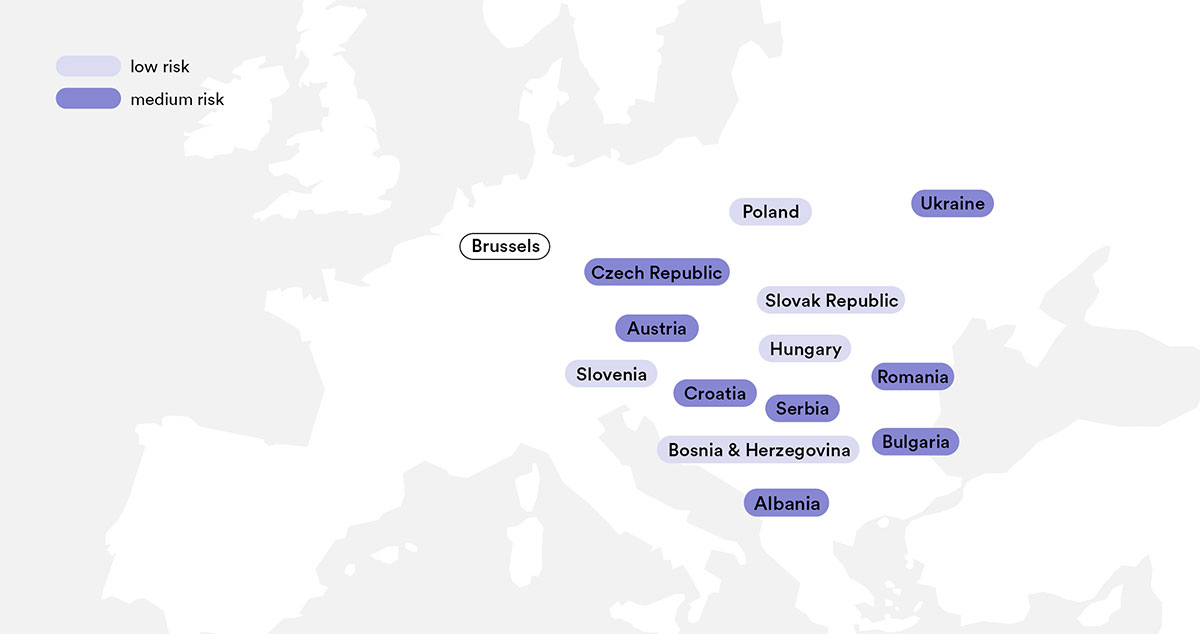
The Second Edition of the Wolf Theiss Collective Redress Guide examines collective redress and collective action mechanisms in CEE and SEE, reflecting recent legal and procedural developments across the 13 jurisdictions where Wolf Theiss operates.
Collective redress regimes continue to develop at different speeds across the region. While certain jurisdictions rely on long-established frameworks, others have introduced comprehensive collective action mechanisms only recently, largely driven by EU-level initiatives such as the Representative Actions Directive (EU) 2020/1828. This harmonised approach has significantly shaped national legislation, especially in areas including consumer protection and data privacy.
The present guide provides a structured overview of the collective redress landscape in CEE and SEE and highlights key legal and procedural considerations relevant to businesses, investors and in-house counsel operating across the region.
Sincerely yours,
Authors of the Wolf Theiss Collective Redress Guide
Disclaimer
The Wolf Theiss Collective Redress Guide is intended to provide a practical overview of the general principles and features of collective redress mechanisms in the jurisdictions it covers.
While every effort has been made to ensure accuracy at the time of publication, this guide should be used only as a general reference and not relied upon for definitive legal decisions. It cannot substitute dedicated legal advice on specific matters. In these rapidly changing legal markets, laws and regulations are frequently revised, either through legislative amendments or statutory interpretation. Neither Wolf Theiss nor the authors accept liability for the accuracy or completeness of this guide.
Status of information: Current as of December 2025
You can download the entire guide below. Individual country-specific chapters are also available for download in the respective country sections
Full guide download
Albania
Albania does not currently provide for a comprehensive collective redress regime comparable to that established under the Representative Actions Directive (EU) 2020/1828. Consumer disputes are generally pursued through individual litigation, while limited quasi-collective mechanisms exist in regulated areas such as consumer protection, unfair competition and environmental matters. The Responsible Consumer Protection Structure and consumer associations may seek injunctive/declaratory relief before the Administrative Court to stop unlawful practices, but collective compensation is not available. Legislative reform is underway: a draft bill on collective actions has been under discussion since 2021 as part of Albania’s broader EU-alignment efforts, however, no further updates have been reported since then. The transposition of Directive (EU) 2020/1818 on representative actions for the protection of the collective interests of consumers into the Albanian legal system is expected by 2026. The system therefore remains limited in scope, as (i) no opt-in or opt-out mechanism currently exists, (ii) representative actions are generally limited to injunctive relief and (iii) reforms are still underway.
Download the Albanian chapter
Related experts

Austria
Austria offers a well-developed and long-standing collective redress framework. The Austrian-Style Collective Action allows claimholders (including companies) to assign claims to a lead entity or special claims vehicle, which then files a complaint pursuing the bundled claims in one proceeding. In parallel, under the newly introduced Representative Actions Directive Implementation Act (Verbandsklagen-Richtlinie-Umsetzungs-Novelle) qualified entities may now file representative actions, enabling not only injunctive or declaratory relief but also claims for damages on behalf of consumers under an opt-in model (minimum fifty claimholders). These mechanisms coexist, creating a dual system that increases strategic options for plaintiffs and litigation risk in consumer-facing disputes.
Download the Austrian chapter
Related experts



Bosnia & Herzegovina
Bosnia & Herzegovina has a fragmented legal framework, with separate procedural regimes in the Federation of Bosnia and Herzegovina, Republika Srpska and Brčko District. The applicable Laws on Civil Proceedings allow authorised associations and institutions to file complaints to protect collective rights and interests, including in areas such as consumer protection, environmental matters and anti-discrimination. Available remedies focus primarily on injunctive or declaratory relief, including the prohibition of unlawful practices and the publication of judgments. As a rule, collective claims for damages are excluded under civil procedure rules, meaning compensation is typically pursued through individual complaints or joint litigation. While the BiH Consumer Protection Act contemplates collective claims for damages, practical implementation remains uncertain due to legislative gaps and limited court practice. Accordingly, the regime remains characterised by (i) collective actions largely limited to injunctive or declaratory relief, (ii) damages generally requiring individual complaints or co-litigants and (iii) limited and inconsistent court practice.
Download the Bosnian & Herzegovinian chapter
Bulgaria
Collective redress in Bulgaria is governed primarily by the Bulgarian Code of Civil Procedure, which allows collective actions to be brought on behalf of claimholders harmed by the same infringement under an opt-in model. A separate mechanism exists under the Bulgarian Consumer Protection Act, enabling administrative bodies and associations to seek injunctive or declaratory relief to stop unlawful practices affecting collective consumer interests. Bulgaria has not yet transposed the Representative Actions Directive (EU) 2020/1828, but legislative reform is progressing: a draft bill introduced in August 2025 proposes amendments to the Bulgarian Consumer Protection Act and would introduce representative actions, potentially allowing both opt-in and opt-out participation, aligning enforcement more closely with EU standards. The current framework is therefore defined by (i) opt-in collective actions under the Bulgarian Code of Civil Procedure, (ii) administrative consumer mechanisms focused on injunctions rather than individual compensation and (iii) an anticipated Directive-alignment reform package.
Download the Bulgarian chapter
Related experts


Croatia
Croatia implemented the Representative Actions Directive (EU) 2020/1828 through the Representative Actions for the Protection of Collective Interests and Consumer Rights Act (the “Croatian Representative Actions Act”), in force since June 2023, establishing a dedicated framework for consumer collective redress. Qualified plaintiffs may file representative actions seeking injunctive or declaratory relief and redress measures, including compensation for damage and/or unjust enrichment. Claims for damages follow an opt-in model, requiring individual claimholders to expressly declare their intention to be represented and to substantiate their loss. Representative actions are limited to infringements of EU consumer protection legislation listed in Annex I of the Act. While no further legislative reforms are currently expected, the regime remains largely untested and future developments are likely to emerge through court practice.
Download the Croatian chapter
Related experts



Czech Republic
Collective redress in the Czech Republic is governed primarily by Act No. 179/2024 Coll. on collective civil proceedings (the “Czech Collective Redress Act”), in force since 1 July 2024, implementing the Representative Actions Directive (EU) 2020/1828. The Act enables qualified entities to file collective actions on behalf of consumers and entrepreneurs as natural persons and small companies (fewer than ten employees and with an annual turnover or balance sheet sum not exceeding CZK 50 million or approximately EUR 2 million), seeking injunctive or declaratory relief as well as redress measures, including claims for damages. Participation follows an opt-in model and the group must include at least ten members. In practice, the regime remains at an early stage, with only a limited number of registered entities and limited court practice to date.
Download the Czech chapter
Related experts


Hungary
Collective redress in Hungary is governed mainly by Act CXXX of 2016 on the Code of Civil Procedure, which distinguishes between (i) public interest actions (actio popularis) and (ii) collective actions. Public interest actions may be filed by authorised persons or bodies (including the public prosecutor, consumer protection authority, the competition authority, the Hungarian National Bank and eligible organisations) and typically operate on an opt-out basis, while collective actions require a group of at least ten claimholders and follow an opt-in model. Both mechanisms are sector-specific, mainly covering consumer, competition, labour and certain environmental harm matters. In practice, collective actions remain rare and overall litigation risk is assessed as low.
Download the Hungarian chapter
Related experts

Poland
Collective redress in Poland is governed by the Enforcement of Claims in Group Proceedings Act of 17 December 2009 (the “Polish Group Proceedings Act”). Standard group proceedings follow an opt-in model and generally require a minimum of ten claimholders, whose claims must be based on the same factual basis and fall within a closed list of admissible claim types (including damages, dangerous products, contractual liability, unjust enrichment, consumer protection matters and certain personal injury claims). Pecuniary claims must be standardised within groups or subgroups, typically as equal lump sums.
Since 29 August 2024, following implementation of the Representative Actions Directive (EU) 2020/1828, Poland also recognises a consumer representative collective action filed by qualified entities, allowing declaratory and injunctive relief and related redress measures, including claims for damages. In practice, group actions remain relatively rare, often targeting banks and insurance companies and overall litigation risk is assessed as low, though activity may increase following the Directive implementation.
Download the Polish chapter
Related experts


Romania
Collective redress in Romania is governed primarily by Act No 414/2023, which transposes the Representative Actions Directive (EU) 2020/1828 (the “Romanian Transposing Act”) and allows qualified entities to file representative actions on behalf of consumers before Romanian courts. Proceedings are conducted under the Romanian Code of Civil Procedure. In addition, procedural aggregation is possible through joinder of parties under Art. 59 and Art. 202 of the Romanian Code of Civil Procedure.
Representative actions under Act No 414/2023 apply only to the sectors in the List annexed to the Act. The regime follows an opt-in model for redress measures, requiring consumers to provide written consent within statutory timelines, while injunctive-only actions do not require consent. Available remedies include injunctive and declaratory relief and redress measures (including compensation, repair, replacement, price reduction, termination or reimbursement). Loss is generally proven individually under Romanian Civil Code principles. Overall risk for companies is assessed as medium, with expected growth in consumer collective actions.
Download the Romanian chapter
Related experts


Serbia
Serbia does not currently provide for a judicial collective redress mechanism comparable to that established under the Representative Actions Directive (EU) 2020/1828. Instead, collective consumer protection is available under the Serbian Consumer Protection Act 2021 through administrative proceedings for protection of the collective consumer interest conducted exclusively before the Ministry of Internal and External Trade. These proceedings are aimed at ceasing and prohibiting practices harmful to collective consumer interests and may be initiated by the Ministry ex officio or upon request by registered qualified consumer organisations. The regime is not structured as either opt-in or opt-out, as consumer interests are protected without their direct participation, although consumers remain free to file individual complaints for damages before civil courts. In parallel, Serbian civil procedure allows for the consolidation of multiple complaints (suparničarstvo) where legal and factual grounds overlap. Available remedies are primarily injunctive / corrective measures and administrative fines, while claiming compensation requires separate civil court proceedings to be instigated. Overall risk for companies is assessed as medium and reforms are anticipated as Serbia continues working towards EU-alignment.
Download the Serbian chapter
Related experts



Slovak Republic
Slovakia introduced a modern collective redress framework through Act No 261/2023 Coll. on actions for the protection of collective interests of consumers (the “Slovak Collective Redress Act”), effective 25 July 2023. The Act provides two specialised mechanisms: (i) a Procedure for Redress Measures, allowing courts to impose remedies such as monetary compensation and other redress in consumer matters (and for damage caused by competition law infringements) and (ii) an Abstract Control Procedure, enabling courts to assess the fairness of consumer contract terms and related practices on an abstract basis, with decisions binding erga omnes. Redress proceedings follow an opt-in model and require at least twenty consumers, each paying a lump-sum fee of EUR 20 to join. Individual proof of loss remains necessary. While the Slovak Code of Civil Procedure also permits consolidation of multiple complaints into a collective action, the collective redress regime has not yet been tested in practice and no actions had been lodged as of 1 October 2025. Overall risk for companies is assessed as low.
Download the Slovak chapter
Related experts


Slovenia
Slovenia introduced a statutory collective redress regime through the Collective Actions Act (Zakon o kolektivnih tožbah), adopted in 2017 and effective from April 2018. A major amendment adopted on 27 December 2023 (in force since 26 January 2024) implemented the Representative Actions Directive (EU) 2020/1828 and strengthened Slovenia’s collective enforcement framework. Collective actions and collective settlements are available in specific sectors where mass harm is common, including consumer protection, competition, capital markets, labour disputes and environmental incidents. Only qualified entities (representative non-profit bodies or the State Attorney’s Office) may file complaints. Proceedings may operate on an opt-in or opt-out basis, but opt-in is mandatory in certain cases, including non-pecuniary damages, higher-value claims or non-resident claimholders. Remedies include claims for damages and injunctive and declaratory relief, with compensation allocated either individually by the court or collectively via a notary acting as compensation administrator. Although twenty-five collective actions had been filed up to 2025, overall litigation risk remains assessed as low.
Download the Slovenian chapter
Related experts

Ukraine
Ukraine currently lacks a dedicated statutory collective redress regime, but several mechanisms function in practice as collective or aggregated enforcement tools. Under the Ukrainian Consumer Protection Act, consumer associations and State consumer protection bodies may file collective consumer complaints primarily seeking injunctive and declaratory relief, after which affected claimholders must file individual complaints and provide individual proof of loss to obtain compensation. Similar aggregation is possible through (i) consolidation of proceedings under the Ukrainian Codes on Civil, Administrative and Commercial Procedure where complaints share a substantially similar factual basis and (ii) administrative model cases, in which the Supreme Court issues a decision binding on lower courts in similar disputes. Collective actions remain rare, typically concentrated in consumer protection and environmental matters and overall litigation risk is assessed as medium. Reform is expected once martial law ends, including a proposed Act aligning Ukraine with Representative Actions Directive (EU) 2020/1828.
Download the Ukrainian chapter